


Articles
How Much Battery Energy Can You Actually Use — and How Fast Can You Put It Back?
Battery capacity is only half of the equation.
A large battery bank is useful, but what really matters aboard a boat is how much of that stored energy you can actually use — and how efficiently you can replace it.
That means looking beyond amp-hours and thinking about the entire charging system.
Start With Usable Capacity
A 400Ah battery bank does not always mean 400Ah of practical energy.
Traditional AGM and lead-acid banks are commonly sized around roughly 50% usable capacity if you want to avoid routinely deep-cycling them and shortening their life.
Lithium iron phosphate batteries can generally use a much larger portion of their rated capacity while also maintaining a more stable voltage under load.
So before thinking about how to recharge your bank, first ask how much energy you actually have available to use.
Then ask the equally important question:
How are you going to put that energy back?
Solar: King of the Charging Sources
For most cruising boats, solar is king.
Once installed, solar quietly replaces energy throughout the day without fuel, noise, generator hours, or much ongoing maintenance.
A properly sized solar array can offset a substantial amount of daily consumption from refrigeration, electronics, lighting, Starlink, and air conditioning.
Solar output does vary with clouds, shading, panel angle, season, and available deck space, so it should not be treated as perfectly predictable. But when you have the space to install it, adding as much practical solar capacity as possible is one of the best improvements you can make to a cruising electrical system.
Lithium pairs especially well with solar because it can efficiently accept charging current through a large portion of its state-of-charge range.
High-Output Alternators: Make Use of Engine Time
A high-output alternator can be another extremely effective charging source, especially on boats that regularly run their propulsion engine.
If you are already motoring to a new anchorage, you may as well be replacing a meaningful amount of energy while doing it.
Many boats also use engine heat to make domestic hot water. In those installations, running the engine can accomplish several things at once: move the boat, recharge the battery bank, and heat water.
That can make alternator charging much more practical than running a separate generator solely to make electricity.
Lithium's high charge acceptance makes high-output alternators particularly effective, but the charging system needs to be properly designed. A large lithium bank can draw enough current to overwork a standard alternator, so high-output alternators, external regulators, temperature monitoring, DC-to-DC charging, or current limiting may be appropriate.
The goal is not simply maximum amperage. It is high, reliable charging output without damaging the alternator.
Generator: Useful, But Not Our First Choice
A generator can replace a large amount of energy quickly, but it is not our preferred primary charging source.
Generators are noisy, expensive to operate, fuel-dependent, and maintenance-intensive. They add oil changes, filters, cooling systems, exhaust components, fuel-system maintenance, and eventually major repairs or replacement.
More importantly, you do not want to simply shift generator runtime from overnight to the next day. If the goal of installing battery-powered air conditioning is to stop running the generator all night, it makes little sense to wake up the next morning and run that same generator for hours just to replace the energy you used overnight.
At that point, you are moving the generator runtime around rather than eliminating it.
Lithium does make generator charging more efficient because the batteries can accept high charging current for much longer than lead acid. If a generator is already aboard, pairing it with a properly sized charger can reduce run time significantly.
But the better goal is to minimize generator dependency altogether. Whenever practical, we would rather see solar doing the daily work and a high-output alternator supplementing it when the propulsion engine is already running.
The generator is best viewed as a backup for periods of unusually high consumption, poor weather, or extended time without sufficient solar production—not the primary way you replenish your batteries every day.
Shore Power
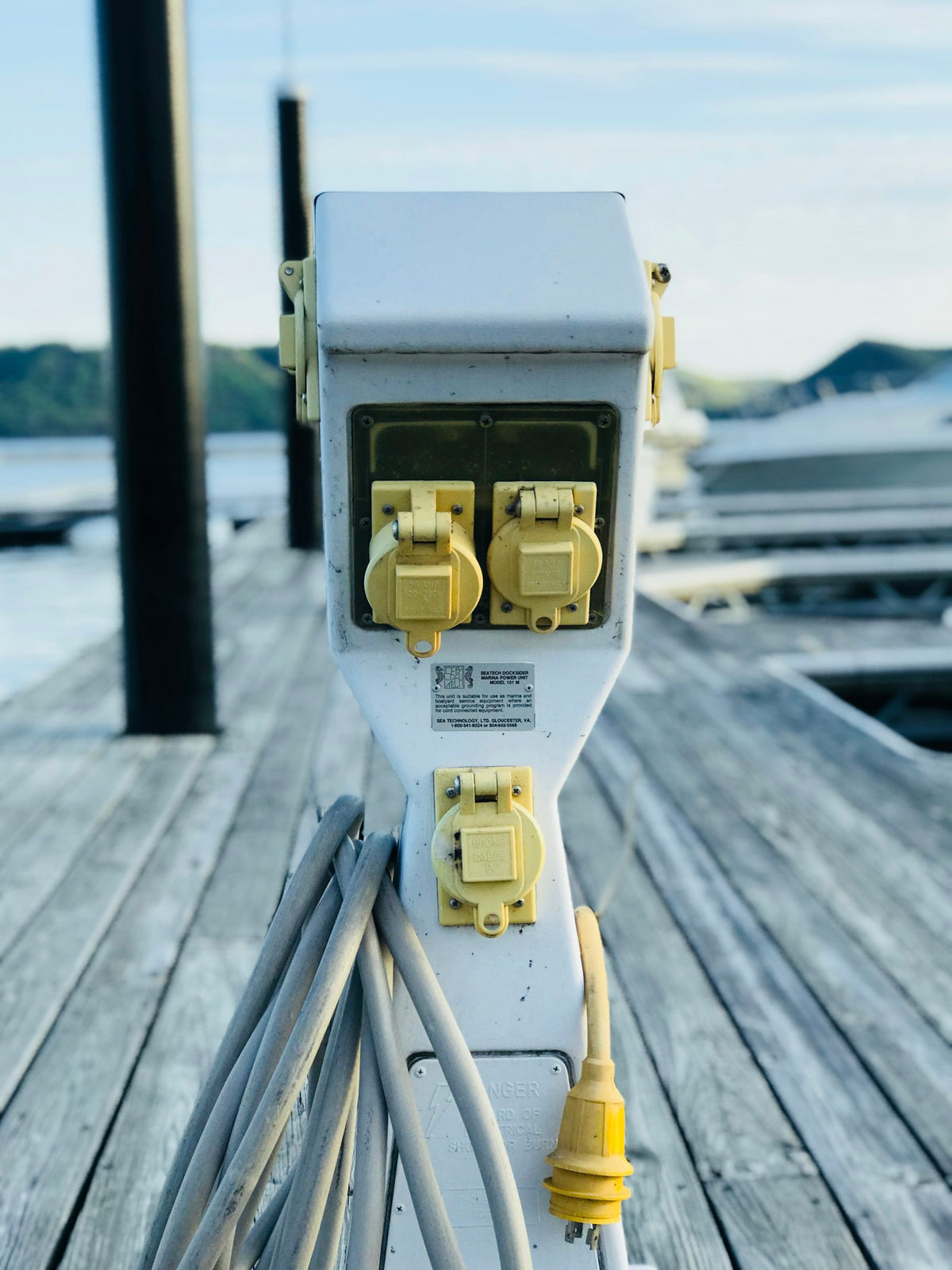
Shore power is usually the easiest charging source when it is available.
Plug in, let the charger do its job, and start the next trip with a full bank.
But recharge time still depends heavily on charger size.
If you use 300Ah overnight and only have a 30A charger, the theoretical minimum recharge time is already around 10 hours before accounting for the rest of the boat's electrical loads.
A larger charger can dramatically reduce that time if the shore connection, battery bank, wiring, and charging equipment are designed to handle it.
This is why charging capacity should be considered when designing the battery bank — not after it is installed.
Think in Daily Energy, Not Just Battery Size
A well-designed electrical system should balance three things:
How much energy you store.
How much energy you consume.
How much energy you can realistically replace each day.
If you use 300Ah overnight but only replace 150Ah the following day, a larger battery bank only delays the problem.
A larger bank gives you more reserve.
A better charging system gives you sustainability.
For most cruising boats, the ideal approach is to let solar provide as much of the daily energy as possible, use the propulsion engine and a capable alternator to make productive use of engine run time, rely on shore power when available, and keep the generator as a backup rather than the default solution.
When planning your next battery upgrade, do not just ask:
How big should my battery bank be?
Ask:
How much of that energy can I use — and how quickly can I put it back?
Keep reading
More answers from the same conversations
Marine Air Conditioning Installation: The Details That Make the Difference
A good marine air conditioner can only perform as well as its installation allows.
READ THE ARTICLE →
Your Generator Should Be the Backup — Not the Plan
Marine generators are useful. There are times when having one aboard is extremely valuable.
READ THE ARTICLE →
How Much Battery Do You Need to Run 12V Air Conditioning Overnight?
Running air conditioning overnight without a generator used to sound unrealistic on most boats. With modern lithium battery banks and efficient var...
READ THE ARTICLE →