


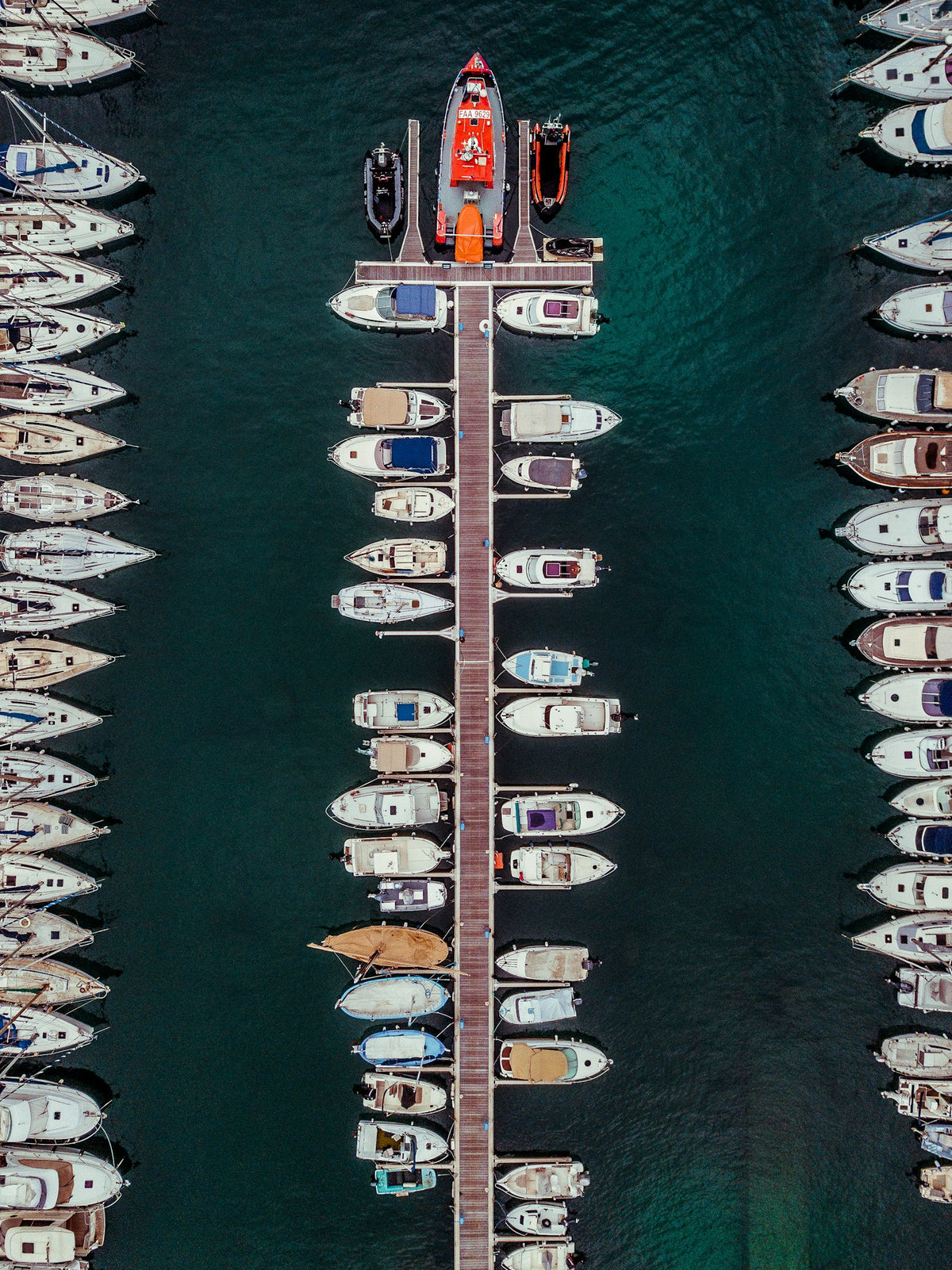
One of the more interesting things about building marine air conditioning is seeing where the systems actually end up.
SeaAir isn’t installed in just one type of boat.
We’ve seen our systems go into everything from high-performance center consoles to long-range cruising sailboats, commercial vessels, motor yachts, raceboats, and even submarines.
That variety is part of what makes marine HVAC interesting: every boat has different space constraints, electrical systems, operating conditions, and expectations.
Center Consoles
SeaAir systems are installed in a number of Freeman center consoles, where space is tight, power matters, and equipment has to work without getting in the way.
These boats are built for performance, so adding comfort without adding excessive weight or complicated infrastructure is important.
Keeping the boat comfortable during long days offshore is where DC air conditioning makes a lot of sense in this category. With a SeaAir system onboard, no generator is required — it runs straight off the battery bank.
Monohull Sailboats
Sailboats are one of the most natural applications for efficient DC air conditioning.
Many cruisers want to spend nights at anchor without running a generator, and they’re already investing heavily in lithium batteries, solar, and high-output alternators.
A properly designed system lets them take advantage of that electrical infrastructure while keeping the boat quiet.
For a monohull cruiser, silence at anchor is a feature all by itself.
Catamarans
Catamarans bring a different set of challenges.
They often have higher heat loads than comparable monohulls because they typically have large cabin roofs, wide saloons, and a lot of glass exposed to direct sunlight. Those big windows create great views, but they also let in a substantial amount of solar heat.
There’s also often more interior volume to cool, multiple cabins, and larger electrical systems.
The upside is that catamarans usually have more roof area available for solar, which can make them especially well suited for efficient DC air conditioning when the electrical system is designed around it.
We’ve seen SeaAir systems used in both owner-operated cruising cats and larger performance-oriented boats where energy efficiency matters just as much as comfort.
Trawlers
Trawlers are another great fit.
These boats often spend long periods underway or at anchor and usually have substantial house electrical systems.
A trawler may already have large battery banks, inverters, alternators, solar, and a generator, so efficient DC air conditioning can integrate naturally into the overall energy strategy.
For owners trying to reduce generator runtime, that can make a noticeable difference.
Motor Yachts
SeaAir systems are also being used on motor yachts.
Even on larger boats that already have generators, DC air conditioning can still make sense in specific cabins, crew spaces, pilot houses, or areas where owners want independent climate control without bringing an entire AC plant online.
Sometimes the goal isn’t replacing every traditional system onboard.
Sometimes it’s simply avoiding starting a large generator for one room.
Pilot Boats and Defense Boats
Commercial and government applications are a different world entirely.
Pilot boats and defense boats are working vessels. Reliability, electrical efficiency, compact installation, and predictable operation matter more than luxury.
These boats may operate long hours in demanding conditions, so equipment has to be practical and durable.
It’s one of the more interesting applications for us because the priorities are very different from a recreational cruiser, but the underlying problem is the same: keep the people and equipment onboard comfortable without wasting energy.
Raceboats
Raceboats might seem like an unusual place for air conditioning, but the engineering logic is straightforward.
Weight matters.
Space matters.
Power consumption matters.
Traditional marine HVAC equipment can be bulky and heavy, so compact DC systems can be useful where every component has to justify the space it takes up.
And Yes, Even Submarines
This is probably our favorite answer when someone asks what kind of boats SeaAir works on.
We’ve even had systems installed in submarines.
That’s about as different from a center console as you can get.
But it also proves the larger point.
Marine climate control isn’t about building one product for one kind of boat.
It’s about managing heat, humidity, electrical power, space, and reliability in environments where all of those things matter.
Different Boats. Same Problem.
A Freeman center console, a cruising sailboat, a catamaran, a trawler, a pilot boat, a motor yacht, and a submarine have very little in common visually.
But from an HVAC perspective, they all face versions of the same challenge:
How do you make the space comfortable without wasting energy or adding unnecessary complexity?
That’s the part we enjoy.
The boats keep changing.
The mission stays the same.
Keep reading
More answers from the same conversations
Marine Air Conditioning Installation: The Details That Make the Difference
A good marine air conditioner can only perform as well as its installation allows.
READ THE ARTICLE →
Your Generator Should Be the Backup — Not the Plan
Marine generators are useful. There are times when having one aboard is extremely valuable.
READ THE ARTICLE →
How Much Battery Do You Need to Run 12V Air Conditioning Overnight?
Running air conditioning overnight without a generator used to sound unrealistic on most boats. With modern lithium battery banks and efficient var...
READ THE ARTICLE →