


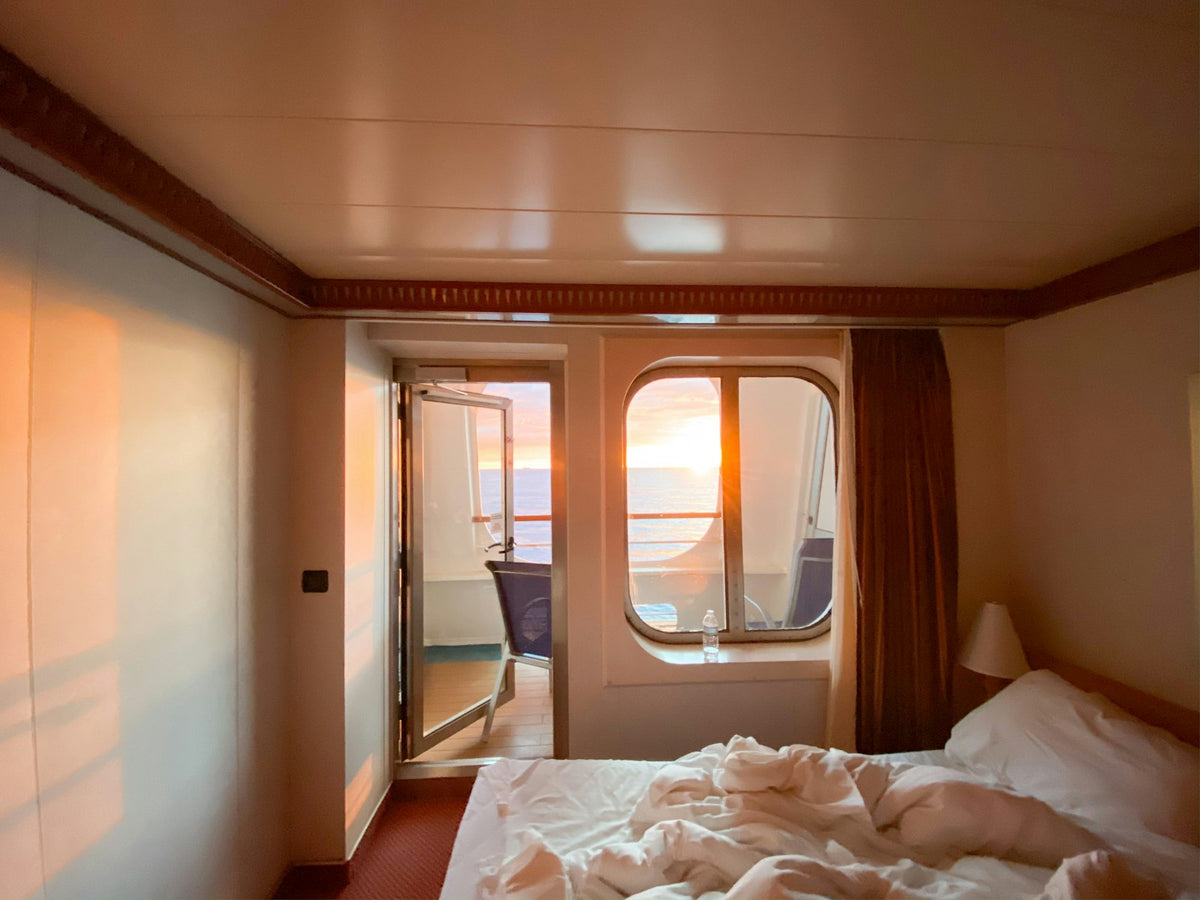
Marine air-conditioning systems are often sized to handle several cabins or a large portion of the vessel at once. But overnight, you may only need cooling in one or two sleeping cabins. That can leave a much larger air-conditioning system running while you are using only a fraction of the cooling capacity it was designed to provide.
SeaAir takes a different approach: compartmentalized cooling.
Instead of depending on one large system to handle multiple spaces, each cabin can have its own SeaAir system. You cool the spaces you are actually using, when you are using them.
Cool the Cabin, Not the Entire Boat
Imagine a boat with three cabins and a large salon.
During the day, you may want to cool the salon. At night, everyone moves into their cabins.
With a large traditional system, keeping those cabins comfortable may require operating a much larger air-conditioning system even though only a small portion of its available capacity is actually needed.
With individual SeaAir systems, the salon can be shut down for the night while one or two smaller cabin systems continue operating.
Instead of running a large system to satisfy a relatively small overnight load, you are using equipment appropriately sized for the spaces being occupied.
That can dramatically reduce the amount of energy required overnight.
Air Conditioning Should Follow the People
Boats are naturally divided into compartments.
Cabins have doors. Heads have doors. Salons are separate spaces. Catamarans may have entire hulls separated from one another.
Your air conditioning can take advantage of that.
Close the cabin door and the SeaAir system only needs to maintain the environment inside that compartment.
Once a properly sealed and insulated cabin reaches the desired temperature and humidity, the system can reduce output and cycle as necessary to maintain it.
There is little benefit in spending battery power maintaining an empty guest cabin.
With independent systems:
- An unused cabin can remain off.
- Guests can choose their own temperature.
- The salon can be shut down overnight.
- Each occupied cabin can operate independently.
- Cooling capacity follows the spaces actually being used.
It is essentially zoning, but instead of relying on one large air-conditioning plant with complicated ductwork and dampers, each cabin has its own dedicated system.
This Is Especially Powerful on Catamarans
Catamarans are almost perfectly suited for compartmentalized air conditioning.
A typical cruising catamaran may have cabins spread across two hulls, with a large salon and galley located on the bridge deck.
Those spaces behave very differently thermally.
The salon may have large windows, substantial solar exposure, frequently opened doors, and a much larger volume of air.
A sleeping cabin down inside the hull may be considerably smaller and easier to maintain.
Trying to serve all of those spaces with larger centralized equipment means installing capacity for the boat's larger combined cooling demands.
But at 2:00 AM, much of that capacity may not be needed.
With individual SeaAir systems, you can shut down the large daytime cooling load and operate only the units in the occupied cabins.
On a four-cabin catamaran with only two cabins occupied, there may be no reason to operate air-conditioning equipment intended to serve the other half of the boat.
Cool the people, not the floor plan.
Smaller Spaces Are Easier to Maintain
The energy required to initially cool a hot cabin is only part of the equation.
Once the cabin reaches temperature, the job becomes maintaining it.
A closed sleeping cabin represents a much smaller thermal load than a large section of the vessel.
The smaller the conditioned space, the less heat needs to be continuously removed.
This is particularly important for boats operating from batteries.
Instead of asking the electrical system to support one large compressor serving multiple spaces throughout the night, several smaller systems can be installed throughout the boat and operated only where required.
That gives the owner considerably more control over where their stored energy goes.
Individual Comfort Without Wasting Energy
Anyone who has traveled with other people knows that everyone has a different idea of a comfortable sleeping temperature.
One cabin might want 68°F.
Another might want 74°F.
Someone else may prefer primarily humidity control.
Independent systems allow each cabin to become its own climate zone.
You are no longer compromising between several cabins or overcooling one area because another part of the boat is warm.
Each person can control the environment in their own space while the rest of the vessel remains unaffected.
Better Redundancy
There is another major advantage to distributed air conditioning: redundancy.
With one large central system, a single failure can eliminate air conditioning throughout much of the boat.
With multiple independent SeaAir systems, one unit can be shut down without affecting the others.
If the salon air conditioner requires service, the cabin units still operate.
If one cabin system develops a problem, the rest of the boat remains conditioned.
For cruising boats traveling far from service centers, redundancy matters.
Rather than depending entirely on one large piece of equipment, cooling capacity is distributed throughout the vessel.
Scale Cooling With the Boat
Compartmentalized cooling also makes system design more flexible.
A boat owner does not necessarily need to operate the vessel's maximum available air-conditioning capacity every time cooling is needed.
Instead, systems can be positioned where cooling is actually needed.
A typical installation might include:
Salon: A larger-capacity unit for daytime cooling.
Primary cabin: Dedicated SeaAir system for overnight operation.
Guest cabins: Independent systems that remain off when guests are not aboard.
The result is a cooling system that adapts to how the boat is actually being used.
When everyone is aboard, more systems operate.
When two people are cruising alone, perhaps only the salon and primary cabin operate.
When everyone goes to bed, the salon shuts down.
The boat's air-conditioning load naturally expands and contracts with occupancy.
A Better Match for Battery-Powered Cruising
This approach becomes even more important as boats move toward large lithium battery banks, solar charging, high-output alternators, and DC appliances.
Battery energy is valuable.
Every amp-hour used unnecessarily is an amp-hour that cannot be used for refrigeration, electronics, lighting, cooking, entertainment, or tomorrow night's air conditioning.
SeaAir systems give boat owners the ability to decide exactly where that energy goes.
You do not need to run a large air-conditioning system just because one cabin needs cooling.
Instead, you can treat each cabin as its own small climate-controlled environment.
The Future of Marine Air Conditioning Is Distributed
Boats are naturally divided into small spaces that are occupied differently throughout the day.
Marine air conditioning should reflect that.
Rather than relying exclusively on large systems designed around maximum cooling demands, SeaAir allows owners to distribute cooling throughout the boat and operate only the systems they actually need.
For catamarans, multi-cabin cruising boats, and anyone trying to run air conditioning efficiently from batteries, the concept is simple:
One cabin. One climate zone. One SeaAir system.
Cool the spaces you are using.
Turn off the spaces you are not.
And stop running more air-conditioning capacity than you actually need.
Keep reading
More answers from the same conversations
Marine Air Conditioning Installation: The Details That Make the Difference
A good marine air conditioner can only perform as well as its installation allows.
READ THE ARTICLE →
Your Generator Should Be the Backup — Not the Plan
Marine generators are useful. There are times when having one aboard is extremely valuable.
READ THE ARTICLE →
How Much Battery Do You Need to Run 12V Air Conditioning Overnight?
Running air conditioning overnight without a generator used to sound unrealistic on most boats. With modern lithium battery banks and efficient var...
READ THE ARTICLE →